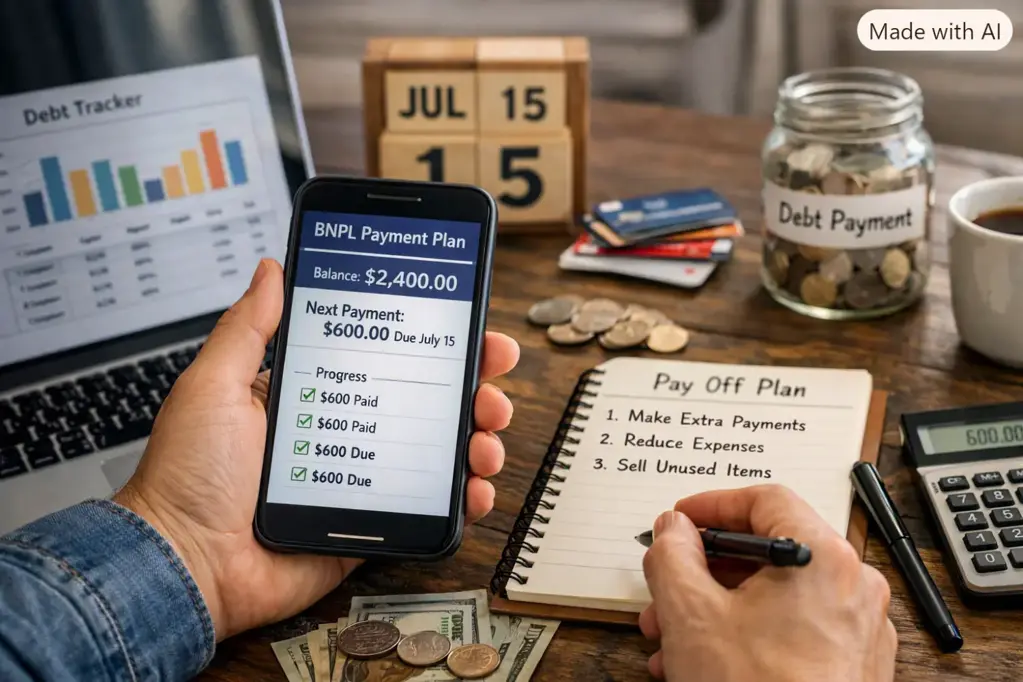
How to Pay Off Buy Now, Pay Later Debt Before It Spirals
Buy now, pay later (BNPL) can make a purchase feel manageable because each instalment is small. The problem starts when several plans overlap: a pair of shoes, a phone, household items and travel costs can each have different payment dates. What looked affordable at checkout can become a difficult monthly cash-flow problem.
If you are juggling multiple plans, do not panic or blame yourself. The fastest route out is to make every payment visible, stop creating new obligations and use a clear BNPL debt repayment strategy. This guide focuses on practical steps for managing active plans, avoiding missed payments and rebuilding a spending plan that works.
How Buy Now, Pay Later Debt Can Become Difficult to Manage
A buy now pay later payment plan is not always presented like traditional borrowing, but it still creates a contractual payment obligation. Many short-term plans charge no interest when paid on time. That does not mean they are risk-free. Late fees, collection activity, account restrictions and possible credit-reporting consequences can make a missed payment more expensive than expected.
BNPL debt often becomes hard to manage for three reasons:
- Payments are fragmented: several small instalments are easy to overlook.
- Due dates do not match income: a payment may leave your account just before payday.
- New purchases hide the total: each checkout shows only one instalment, not all existing commitments.
Your aim is to turn a collection of separate plans into one simple monthly picture. Once you know what is due and when, you can make decisions before your bank balance is under pressure.
List Every BNPL Balance, Due Date, and Remaining Payment
Start with an inventory. Check each provider app, email confirmation, bank statement and retailer account. Include plans that have only one payment left; those are still claims on your next pay packet.
Use a notebook, spreadsheet or a free budget app such as WhizBudget to create a list. Record the original purchase only if it helps you identify the plan; the important figures are what remains and when it is due.
| Provider / item | Payment due | Amount due | Payments left | Balance remaining |
|---|---|---|---|---|
| Provider A / trainers | 8th | €22 | 2 | €44 |
| Provider B / phone | 16th | €45 | 5 | €225 |
| Provider A / home goods | 27th | €18 | 1 | €18 |
| Total | €85 this month | €287 |
Also note whether the provider collects automatically from a debit card or bank account. An automatic collection can fail if there is not enough money available, so it needs just as much planning as a manual payment.
Calculate the True Monthly Cost of Your BNPL Plans
Add every instalment due between your next payday and the following payday. This is your real BNPL monthly cost, not the amount shown for any single order. Then compare it with your available income after essential costs such as rent, utilities, food, transport, insurance and minimum payments on other debts.
A simple calculation is:
Take-home pay − essential living costs − all BNPL payments due = amount left for savings, flexible spending and extra repayments.
If the result is negative, you have identified the problem early. Do not try to solve it by opening another pay-later plan. Instead, reduce flexible spending immediately and contact any provider whose payment you may not be able to make.
Stop Adding New Buy Now, Pay Later Purchases
Pause new BNPL purchases while you pay down existing plans. This is not a permanent ban on spending; it is a short-term rule that stops the balance from moving further away. Delete saved payment methods from shopping sites, remove provider apps from your home screen and unsubscribe from retail marketing emails if they trigger impulse purchases.
For necessary purchases, use money already allocated in your budget. If you cannot pay cash or debit today, consider whether the item can wait. A short pause gives your existing repayment plan room to work.
Choose a Repayment Order for Multiple BNPL Balances
Continue making every scheduled payment first. If you have money left after essentials and all required instalments, direct it to one plan at a time. Check your agreement before making an early repayment: many providers allow it, but the process and any effect on future scheduled collections can vary.
Choose one of these straightforward approaches:
- Smallest balance first: clear the lowest remaining balance to reduce the number of due dates quickly. This can build momentum.
- Highest-cost balance first: prioritise a plan with interest, fees or a more urgent collection risk. This can reduce total cost.
- Cash-flow first: clear a plan with a large upcoming instalment if removing it will make your next month easier to manage.
For most short, interest-free plans, the smallest-balance or cash-flow approach is practical. The best method is the one you can follow consistently. After one plan is cleared, roll its former payment amount into the next target rather than treating it as extra spending money.
Build a Payment Calendar That Prevents Missed Due Dates
Put every due date into one calendar, alongside your paydays and essential direct debits. Set two reminders: one three to five days before the due date and another on the day before. If a provider takes payment automatically, aim to have the money in the relevant account at least one working day early, especially around weekends and bank holidays.
Match payments to paycheques. For example, if you are paid on the 25th and payments are due on the 2nd, 6th and 12th, move that money into a separate bills pot on payday. Treat it as already spent.
- List all payments due before your next payday.
- Set aside that total as soon as you are paid.
- Check the calendar once a week for new dates, refunds or completed plans.
- Keep a small buffer if possible for timing differences or failed collections.
WhizBudget can help you view upcoming bills and planned spending in one place, making it easier to see whether a due date will strain your account before it happens.
What to Do If You Cannot Afford an Upcoming BNPL Payment
Act before the due date. Contact the provider through its official app, website or customer support channel and explain that you are experiencing a temporary payment difficulty. Ask what options are available, such as changing a payment date, a short extension or a payment arrangement. Do not assume an option exists, and get any agreed change confirmed in writing.
Review the terms of your specific agreement before taking action. Provider policies, late charges and hardship support vary by country and product. If the payment is set to collect automatically, do not simply ignore it; understand whether changing the payment method or cancelling a mandate is permitted and what consequences may follow.
At the same time, protect essentials. Prioritise housing, food, energy, transport to work and necessary insurance. If several debts are unmanageable, contact a free, reputable debt-advice service in your country. In the UK, organisations such as StepChange and National Debtline offer free support; elsewhere in Europe, consumer advice bodies and national debt-counselling services may be available.
How Missed BNPL Payments Can Affect Your Credit
What happens if you miss a BNPL payment depends on the provider, product and country. A provider may charge a late fee, retry the payment, freeze your account, refer the balance to collections or report payment information to one or more credit reference agencies. Some products may not currently be reported in the same way as others, but practices can change.
Do not rely on general claims that BNPL never affects credit. Read your current agreement and the provider's credit-reporting policy, then check your credit report with the relevant agencies in your country if you are concerned. A missed payment can also affect your finances even if it is not immediately visible on a credit file, because fees and collection contact can add pressure.
When to Consider Returning an Item or Requesting a Refund
If a recent purchase is unused, unwanted or unsuitable, check the retailer's return policy promptly. A successful return may reduce or cancel the related BNPL balance, but do not assume this happens instantly. Keep proof of the return, monitor both the retailer and provider accounts, and continue making due payments unless the provider confirms that the plan has been adjusted or closed.
For faulty goods or services not delivered, contact the retailer first and raise a dispute through the BNPL provider if its process allows. Follow the stated deadlines and save screenshots, emails and delivery evidence. A refund can be useful, but it should not be your only repayment plan because processing times vary.
How to Rebuild Your Spending Plan After Paying Off BNPL Debt
Once the final balance is cleared, keep the old payment amount in your monthly plan for a while. Redirect it first to a small emergency fund. Even a modest buffer can prevent the next unexpected expense from becoming another instalment plan.
Then create a realistic sinking fund for predictable costs such as annual insurance, gifts, repairs and holidays. Divide an expected annual cost by the number of months until it is needed and save that amount each month. This turns future purchases into planned spending rather than debt.
Use a weekly check-in to compare planned and actual spending. WhizBudget is a free budget app that can help you track categories and give each euro a purpose before you spend it. The goal is not perfection; it is knowing that your available cash covers the commitments you make.
FAQs About Buy Now, Pay Later Debt
Can I pay off BNPL debt early?
Often, yes. Check the provider's app or agreement for an early-settlement option and confirm that future automatic payments will be updated. Rules vary, so verify the current terms before paying extra.
Should I use a credit card or loan to pay off BNPL debt?
Not automatically. Moving several short-term plans to a new credit product may simplify dates, but it can also add interest, fees or a longer repayment period. Compare the total cost and only consider it if you can afford the new payment and will stop adding BNPL purchases.
What happens if I miss a BNPL payment?
You may face a late fee, a retried collection, account restrictions, collections activity or potential credit reporting. The exact outcome depends on the provider, product and local rules. Contact the provider before the due date where possible.
Can a retailer refund a purchase after I have started paying with BNPL?
Usually, a valid refund should be applied to the related plan, but timing and process vary. Return the item under the retailer's policy, retain evidence and keep checking your BNPL account until the adjustment is confirmed.
Does BNPL debt affect my credit score?
It can, depending on the provider and country. Some providers may perform credit checks or report payment performance, while others may not report every product. Review the agreement and current reporting policy rather than making assumptions.
How much should I budget for BNPL each month?
Budget the full amount due across all plans before your next payday, not just one instalment. If that total does not fit after essential costs, pause new purchases and contact providers about any payment difficulty.
Conclusion: Take Control One Payment at a Time
Buy now pay later debt is manageable when you make the full picture visible. List every plan, reserve money around paydays, stop adding new instalments and ask for help before a payment is missed. Small actions taken today can prevent fees, stress and a larger debt problem tomorrow.
Start your inventory now, choose your first repayment target and use WhizBudget to build a clear, free spending plan around your real due dates. A budget that reflects every commitment is the foundation for getting back in control.
Related Articles

Joke of the day by GiggleTime