Learning how to budget for beginners does not require complicated spreadsheets, strict rules, or a perfect financial history. Your first personal budget only needs to do one useful job: show you where your take-home pay needs to go this month.
Set aside one hour, use the numbers you have today, and create a plan you can check each week. It will not be perfect—and that is exactly why you should start now. After one month of real spending, you can adjust it with much better information.
Gather Your Numbers in 10 Minutes
Before you build a monthly budget for beginners, collect a few basic figures. Do not spend hours searching for every small transaction. Estimate where necessary and improve the numbers next month.
- Monthly take-home income: the money that reaches your bank account after tax, pension contributions, and other deductions.
- Current account balances: check and savings balances are useful context, but do not count them as this month’s income.
- Essential monthly bills: rent or mortgage, utilities, insurance, debt repayments, mobile plan, and regular transport costs.
- Recent flexible spending: look at the last month or two of card and bank transactions for groceries, fuel, eating out, and personal purchases.
If your income varies, use the lowest reliable amount you expect to receive this month. Budgeting from an optimistic figure can leave you short. Any extra income can be assigned later once it arrives.
For couples or shared households, decide whether this is an individual budget or a household budget. If you share costs, include only the income and expenses you are responsible for, unless you are planning everything together.
Choose a One-Month Budget Period and List Your Starter Categories
A calendar month is the simplest period for a beginner budget plan. Start on the first day of the next month, or start today and create a budget for the remaining weeks. The goal is to make one clear plan rather than wait for a more convenient date.
Keep your categories broad at first. Too many categories make a first budget harder to maintain. These starter categories cover most household spending:
- Housing: rent or mortgage and service charges
- Utilities: electricity, heating, water, internet, and mobile
- Groceries
- Transportation: public transport, fuel, parking, or car costs
- Insurance
- Debt payments: loans, credit cards, and overdrafts
- Personal spending: clothes, entertainment, cafés, hobbies, and subscriptions
- Savings
- Miscellaneous costs: a small allowance for irregular everyday expenses
You can add categories later if a broad group hides an important problem. For now, clarity matters more than detail.
Build Your First Personal Budget in 20 Minutes
Write your monthly take-home income at the top of a page, spreadsheet, or budgeting app. Then add an amount for each starter category. Begin with expenses that are fixed or difficult to change, such as housing, insurance, and minimum debt repayments. Next, estimate flexible categories such as groceries and personal spending.
- Write down your total monthly take-home income.
- Add fixed essential expenses.
- Set realistic amounts for groceries and transport based on recent spending.
- Choose an initial savings amount, even if it is small.
- Add a miscellaneous amount to reduce surprises.
- Compare the total planned spending with your income.
This is how to create a budget without making it restrictive. You are giving your money a practical set of jobs for one month. A free budget app such as WhizBudget can keep the categories, planned amounts, and actual transactions in one place, but a simple notes app or spreadsheet also works.
Worked Example: A Beginner Budget With €3,000 Monthly Take-Home Pay
Here is a simple example using €3,000 of monthly take-home pay. The amounts are illustrative; your housing costs, transport needs, and debt obligations may look very different.
| Category | Planned monthly amount |
|---|---|
| Housing | €1,050 |
| Utilities | €250 |
| Groceries | €400 |
| Transportation | €180 |
| Insurance | €120 |
| Debt payments | €250 |
| Personal spending | €250 |
| Savings | €300 |
| Miscellaneous costs | €200 |
| Total planned | €3,000 |
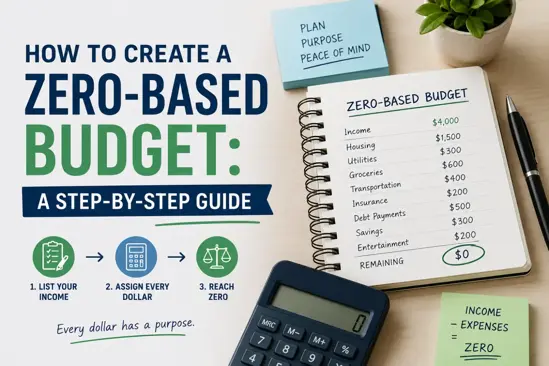
This example assigns the full income across necessary costs, everyday spending, and future priorities. That does not mean every month will look this tidy. It simply shows the basic maths: income minus planned spending should equal zero or a positive amount, not a negative one.
Compare Planned Spending With Available Income
Now subtract your total planned spending from your take-home income. There are three possible results.
- Your plan is below income: you have money left to direct intentionally.
- Your plan equals income: your first budget is balanced. Track it and see whether the amounts are realistic.
- Your plan is above income: reduce or postpone something before the month begins where possible.
If you are over budget, do not panic and do not cut essentials that must be paid. First check for duplicate subscriptions, underestimated income deductions, or categories you accidentally counted twice. Then look at flexible spending: personal spending, takeaway food, non-essential shopping, and transport choices may offer room to reduce.
If fixed costs and minimum debt payments alone leave too little for basics, your budget is highlighting a genuine cash-flow problem—not a personal failure. Contact lenders or service providers early if you may struggle to make a payment, and seek reputable debt advice in your country if needed.
Decide What to Do With Remaining Money
If money remains after you have covered your planned costs, make a specific decision before it disappears into untracked spending. You might increase savings, make an extra debt payment, add more to groceries if your estimate felt tight, or keep a larger miscellaneous allowance for the first month.
For beginners, a modest buffer is often more useful than an unrealistically high savings target. For example, if you have €100 left, assigning €50 to savings and €50 to miscellaneous costs can make the plan easier to follow. The right choice is the one that matches your immediate situation.
Set Up a Simple Way to Track Spending for the First Month
A budget only becomes useful when you compare the plan with what actually happens. Choose one tracking method you will genuinely use:
- Enter purchases manually in a notes app or spreadsheet every few days.
- Review bank and card transactions once a week and total them by category.
- Use WhizBudget, a free budget app, to record spending against your category limits.
Record the amount, date, and category. A €46 supermarket purchase belongs in groceries; a €12 streaming subscription belongs in personal spending if you have not made subscriptions a separate category. Be consistent rather than overly precise.
Cash spending can be easy to forget. Keep receipts or enter a single cash total at the end of each day. If you use multiple cards or payment services, include all of them. Missing transactions makes it seem as though you have more available than you really do.
Your First-Month Budget Routine: Weekly Check-Ins and Adjustments
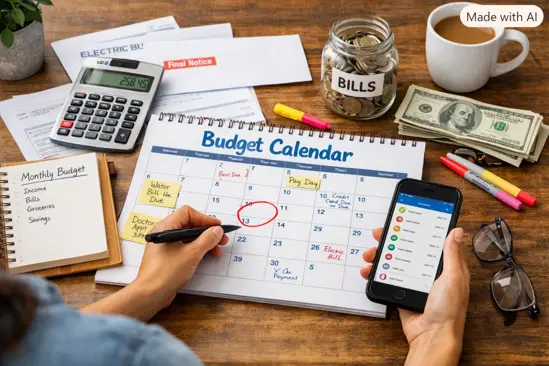
Do not wait until month-end to look at your budget. Schedule a 10-minute check-in once a week. Review what you have spent, what bills have been paid, and what remains in each flexible category.
- Check your account balance and recent transactions.
- Update each category with actual spending.
- Identify categories that are running ahead of plan.
- Reduce a different flexible category if needed for the rest of the month.
- Leave fixed bills alone unless there is an error.
At the end of the month, review the gaps between planned and actual spending. If groceries were €60 over budget but personal spending was €60 under, your total plan may be fine; the category amounts simply need adjusting. If you repeatedly spend more than income, reduce the plan or address the underlying cost before setting next month’s budget.
Common Beginner Budgeting Mistakes to Avoid
- Using gross pay: budget from take-home pay, not the salary shown before deductions.
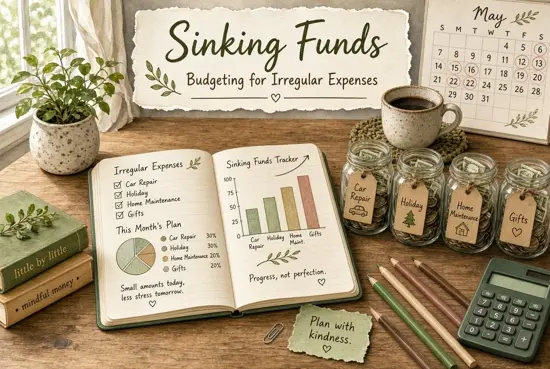
- Forgetting annual or occasional charges: include a reasonable monthly estimate in miscellaneous costs for now.
- Making spending limits too strict: a budget you abandon after one week is less useful than a realistic one.
- Ignoring small purchases: regular coffees, app purchases, and delivery fees can add up quickly.
- Checking only once a month: weekly reviews give you time to change course.
- Giving up after an overspend: update the numbers and continue. One bad week does not invalidate the whole budget.
FAQs About Creating a First Budget
How do I start a budget if I have never tracked spending?
Start with monthly take-home income, fixed bills, and broad estimates for groceries, transport, and personal spending. Track actual purchases during the first month and use those results to improve next month’s budget.
What is a good monthly budget for beginners?
A good monthly budget is one where planned spending does not exceed take-home income and the category amounts reflect your real costs. There is no universal set of percentages that works for every household.
Should I include savings in my first personal budget?
Yes, if your income allows it. Even a small planned savings amount helps you build the habit. If essential costs are currently too high, focus first on keeping bills and basic needs covered.
What if my expenses are higher than my income?
Check the figures for errors, then reduce flexible spending where possible. If essential costs and minimum repayments are still unaffordable, contact relevant providers early and consider local free debt advice.
How often should I check my budget?
Check it weekly during your first month. Weekly check-ins are frequent enough to catch problems without making budgeting feel like a daily chore.
Do I need a spreadsheet to make a budget?
No. You can use paper, a notes app, or a free budget app. The best tool is the one you will update consistently.
Start With a Usable Budget and Improve It After One Month
Your first budget is a starting point, not a test you can fail. In one hour, you can build a clear plan for your income, essential bills, everyday spending, savings, and unexpected costs. Then let one month of real transactions show you what needs to change.
Create your categories today, schedule your first weekly check-in, and keep the process simple. Try WhizBudget free to build your first personal budget and see your spending plan in one straightforward place.