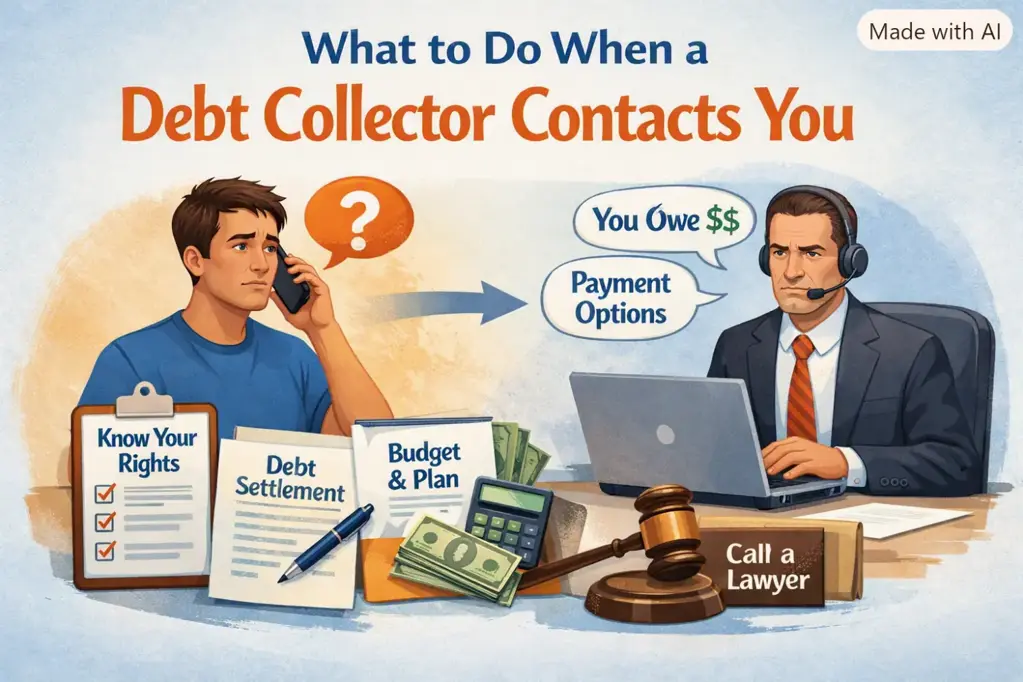
What to Do When a Debt Collector Contacts You
Getting a call, email, letter, or text from a debt collector can feel intimidating, especially if the debt is old, unexpected, or linked to a difficult period in your life. The most important thing to remember is simple: you do not have to react immediately. A calm, organised response can help you avoid scams, protect your consumer rights, and decide whether the debt is accurate and affordable.
This guide explains what to do when a debt collector contacts you, step by step. It covers how to verify the collector, request proof, check your credit reports, communicate safely, document everything, and seek help if you need it. Debt collection rules, limitation periods, reporting rules, and dispute deadlines vary across Europe, so treat this as general guidance rather than legal advice.
What to Do Before Responding to a Debt Collector
Before you answer questions, pay money, or agree to a plan, slow the process down. Debt collectors may be legitimate, but mistakes happen. Debts can be sold between companies, balances can be wrong, and sometimes scammers pretend to collect debts that do not exist.
Your first goal is not to argue. It is to gather information and avoid giving away details that could be misused. If you receive a phone call, you can say that you do not discuss financial matters by phone and ask for written information. If you receive a letter or email, do not click links or call numbers until you independently verify the company.
Take these first steps:
- Write down the date, time, phone number, email address, or postal address used.
- Ask for the collector's company name, registration details, and contact address.
- Ask who the original creditor was, the amount claimed, and the account reference.
- Do not confirm your full date of birth, banking details, card number, or online banking access.
- Do not make a payment just to make the call stop.
- Do not admit liability until you have reviewed the evidence and your local rules.
If the collector becomes aggressive, end the conversation politely. A legitimate collector should be able to provide information in writing and allow you time to review it.
How to Verify Whether the Debt Is Legitimate
Verification has two parts: checking the company and checking the debt. A real collection agency should be traceable through official business registers, financial conduct registers where relevant, professional memberships, or the website of the original creditor. Do not rely only on the phone number provided by the caller.
To check the collector, search for the company independently. Look for a registered office, official website, regulator entry, consumer complaints, and contact details that match the letter you received. Then contact the original creditor using details from an old statement, the creditor's official website, or your banking records. Ask whether they still own the debt or have assigned it to a collection agency.
To check the debt itself, compare the collector's claim with your own records. Look for old loan agreements, credit card statements, utility bills, bank transactions, emails, payment confirmations, or account closure letters. Pay attention to the dates. In many European countries, there are limitation periods after which a creditor may be restricted from taking court action, but these rules vary significantly and can be affected by payments, written acknowledgements, or court judgments.
| Question to check | Why it matters |
|---|---|
| Do I recognise the original creditor? | Collections are often sold, so the collector's name may be unfamiliar even when the original account is real. |
| Is the balance correct? | Fees, interest, payments, or duplicate accounts can make the amount inaccurate. |
| Is the debt too old? | Time limits vary by country and debt type. Get advice before paying or acknowledging an old debt. |
| Has there already been a court judgment? | Court-ordered debts may have different enforcement rules and deadlines. |
| Does it appear on my credit report? | Credit reporting can reveal errors, duplicate collections, or identity theft. |
How to Request Debt Validation in Writing
A debt validation letter is a written request asking the collector to prove what they are trying to collect. The exact legal term and deadline may differ depending on your country, but the principle is the same: ask for clear evidence before you pay or agree to anything.
Your request should be short, factual, and sent in a way you can prove. Use registered post, tracked delivery, secure email, or the collector's official dispute portal if available. Keep a copy of everything you send.
Ask the collector to provide:
- The name and address of the original creditor.
- The current creditor if the debt was sold or assigned.
- The original account number or reference.
- A breakdown of the balance, including interest, fees, and payments.
- Copies of agreements, statements, invoices, or notices supporting the claim.
- Proof that the collector has authority to collect.
- The date of the last payment or account activity, if relevant.
You do not need to write a long legal argument. A simple letter works well: identify yourself, state that you do not admit liability, request validation of the debt, and ask the collector to pause collection activity until they respond where your local law requires or allows it. If you are unsure about limitation rules, avoid saying anything that could be treated as acknowledging the debt.
When the response arrives, compare it with your records. If the collector cannot provide meaningful proof, you may have grounds to dispute the debt. If they provide evidence and the balance appears correct, you can move on to deciding how to handle payment or negotiation.
How to Review Your Credit Reports for Collection Accounts
Debt collectors may report collection accounts to credit reference agencies, but reporting systems differ across Europe. In some countries, negative credit data is heavily regulated and time-limited. In others, private credit bureaus maintain broader records. Either way, checking your credit reports helps you spot errors and understand how the debt may affect borrowing, renting, insurance, or mobile contracts.
Request your credit data from the main credit reference agencies in your country. Under data protection laws such as the GDPR, you generally have rights to access personal data held about you. Review each report carefully because one agency may show information that another does not.
Look for these problems:
- A collection account you do not recognise.
- A debt listed more than once by different collectors.
- An incorrect balance or payment status.
- A paid debt still showing as unpaid.
- An account belonging to someone with a similar name.
- Old information that should no longer be reported under local rules.
- Signs of identity theft, such as accounts you never opened.
If you need to know how to remove inaccurate collections from credit report files, start by disputing the specific error with the credit reference agency and the company reporting it. Include evidence such as payment receipts, settlement letters, identity theft reports, account closure confirmation, or correspondence from the creditor. Do not expect a dispute to erase a valid debt automatically. The goal is to correct inaccurate, incomplete, duplicated, outdated, or unverifiable information.
What to Say and Not Say When a Collector Calls
Phone calls can pressure you into decisions you would not make after reading the facts. You are allowed to set boundaries. In many places, collectors must follow rules about fair treatment, harassment, misleading statements, and contact times. Your debt collector rights may include the right to receive information, the right to challenge inaccurate claims, and the right not to be harassed, but the details depend on your location.
Use calm, limited language. For example:
- I do not discuss debts by phone. Please send details in writing.
- I do not admit liability. I am requesting proof of the debt.
- Please provide the name of the original creditor and your authority to collect.
- I will review the documents and respond in writing.
- Do not contact me at work. Please use my postal address or email.
Avoid statements that could create problems later, especially for old debts. Do not say that you definitely owe it, promise to pay by a certain date, provide card details, or agree to a direct debit before you understand the debt and your budget. If you decide to pay, get the agreement in writing first.
If the collector threatens arrest, immigration consequences, public embarrassment, or immediate seizure of goods without proper legal process, treat that as a serious warning sign. Debt collection can be stressful, but legitimate civil debt collection should follow formal procedures.
How to Document Calls, Letters, Payments, and Disputes
Good records protect you. If a dispute escalates, you may need to prove what was said, what was sent, when a payment was made, or what the collector promised. Create a simple folder on your computer or in cloud storage, plus a paper folder for postal letters.
Track the following:
- Dates and times of calls.
- Names of people you spoke with.
- Phone numbers, email addresses, and postal addresses used.
- Summaries of conversations.
- Copies of letters and emails sent or received.
- Proof of delivery for important letters.
- Debt validation responses and supporting documents.
- Payment receipts, settlement agreements, and final balance confirmations.
- Credit report disputes and investigation results.
If recording calls is legal in your country, check the rules before doing so. In some places, you must notify the other person or get consent. If you cannot record, write a note immediately after the call while the details are fresh.
WhizBudget, a free budget app, can help you track your income, essential bills, and available cash before you agree to a repayment plan. Keeping your debt file separate from your monthly budget can also make the process less overwhelming.
How to Spot Debt Collection Scams
Scammers use fear and urgency. They may pretend to be a solicitor, bailiff, court officer, tax agency, bank, or well-known collection company. They often know some personal information already, which can make the contact seem real.
Common debt collection scam warning signs include:
- Refusing to provide written proof of the debt.
- Demanding immediate payment to avoid arrest or prosecution.
- Asking for payment by gift card, cryptocurrency, money transfer, or other unusual methods.
- Using threats, insults, or excessive pressure.
- Contacting you from a personal email address or untraceable number.
- Asking for online banking passwords, one-time codes, or full card details.
- Claiming you cannot speak to anyone else about the debt.
- Providing company details that do not match official registers.
If you suspect a scam, do not engage. Hang up, do not click links, and do not download attachments. Contact the original creditor directly using official details. You can also report suspected fraud to your national consumer protection authority, police cybercrime unit, financial regulator, or data protection authority, depending on the situation.
What to Do If the Debt Is Accurate but You Cannot Pay
If the debt is valid but unaffordable, you still have options. Do not ignore it, but do not agree to payments that put rent, food, utilities, medicines, transport, or child support at risk. Priority expenses come first.
Start with a realistic budget. List your monthly net income, essential expenses, minimum debt payments, irregular annual costs, and emergency savings needs. Then calculate what you can safely offer. If the amount is very small, it is still better to be honest than to promise a payment that will fail.
| Option | Best for | Watch out for |
|---|---|---|
| Affordable payment plan | People with steady income who can pay over time | Get interest, fees, and review dates in writing. |
| Temporary hardship arrangement | Short-term income loss, illness, or emergency | Ask how it affects credit reporting and future payments. |
| Full and final settlement | People with a lump sum available | Get written confirmation that the remaining balance will not be pursued. |
| Formal debt solution | Serious debt problems involving multiple creditors | Rules, costs, and credit impact vary by country. |
| Nonprofit credit counselling | Anyone unsure what to offer or prioritise | Use reputable free or low-cost services, not high-pressure firms. |
When negotiating, keep everything in writing. A collector may accept a lower settlement or reduced payments, especially if you show a clear income and expense summary. Ask whether interest and charges will stop, how payments will be applied, and what will be reported to credit reference agencies.
Use WhizBudget to build a monthly spending plan before making an offer. A repayment plan should fit your real life, not just sound good during a stressful phone call.
When to Contact a Nonprofit Credit Counselor or Attorney
Some debt collection problems are straightforward. Others need expert help. A nonprofit credit counsellor can review your budget, explain repayment options, and help you prioritise debts. This is especially useful if you have several creditors, missed priority bills, or no clear idea of what you can afford.
Consider speaking with a qualified debt adviser, consumer organisation, or attorney if:
- You receive court papers, enforcement notices, or bailiff communications.
- The debt may be time-barred or close to a limitation deadline.
- You believe the collector is harassing you or breaking local rules.
- You are dealing with identity theft or fraud.
- Your wages, bank account, or property may be at risk through legal enforcement.
- You are considering insolvency, bankruptcy, or another formal debt solution.
- The debt involves tax, child maintenance, rent arrears, or secured lending.
Free help may be available through municipal debt advice services, consumer protection agencies, charities, ombudsman schemes, legal aid clinics, or nonprofit credit counselling organisations. Avoid companies that demand large upfront fees, promise to wipe out debts with no consequences, or pressure you to sign quickly.
FAQs About Debt Collectors and Debt Validation
What is the first thing I should do when a debt collector contacts me?
Stay calm, avoid confirming personal or financial details, and ask for the collector's name, company, contact details, original creditor, amount claimed, and written information about the debt. Do not make a payment or promise until you have checked that the debt is legitimate.
What is a debt validation letter?
A debt validation letter is a written request asking the collector to prove the debt, including who the original creditor is, how much is owed, and why they have the right to collect. Send it in writing and keep a copy with proof of delivery where possible.
How do I dispute a collection account?
If you are wondering how to dispute a collection account, start with a written dispute to the collector. If the account appears on your credit report, also dispute it with the credit reference agency. Explain what is wrong and include copies of evidence. Valid debts are not automatically removed simply because you dispute them.
How can I remove inaccurate collections from my credit report?
You can request corrections if a collection is inaccurate, duplicated, too old to be reported, already paid, or belongs to someone else. Contact the credit reference agency and the data provider with evidence. The process and deadlines vary by country.
What are common debt collection scam warning signs?
Warning signs include pressure to pay immediately by unusual methods, refusal to provide written proof, threats of arrest, requests for sensitive details, and contact from a company you cannot verify. Hang up and independently check the creditor or agency before taking action.
What if I owe the debt but cannot afford to pay?
If the debt is accurate but unaffordable, review your budget, prioritise essential bills, and consider offering an affordable payment plan or settlement in writing. A nonprofit credit counsellor can help you compare options before you agree to anything.
Conclusion: Slow Down, Verify, Then Decide
A debt collector contact is not something to ignore, but it is also not something that should push you into a rushed decision. Verify the collector, request written validation, check your credit reports, keep detailed records, and watch for scams. If the debt is wrong, dispute it with evidence. If it is accurate, choose a repayment or advice route that protects your essential living costs.
The strongest response is organised, calm, and documented. If you need help understanding what you can afford, use WhizBudget as a free budget app to map your income, bills, and realistic repayment capacity before you speak with a collector again.
More From the Blog



Joke of the day by GiggleTime