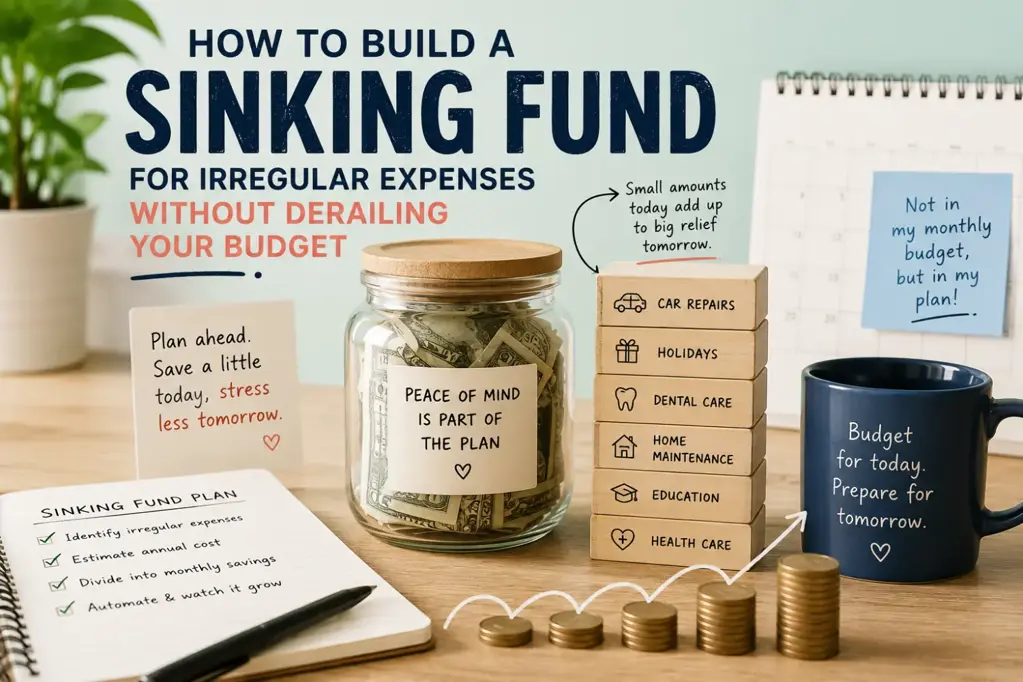
How to Build a Sinking Fund for Irregular Expenses Without Derailing Your Budget
How to Build a Sinking Fund for Irregular Expenses Without Derailing Your Budget
If your monthly budget looks fine on paper but falls apart whenever the car needs repairs, your insurance renewal arrives, or school costs pop up, you are not bad with money. You are probably just budgeting for a normal month and forgetting that real life is not monthly.
Many household costs in Europe are irregular. They may happen once a year, twice a year, seasonally, or without a neat pattern. Car maintenance, annual subscriptions, holidays, property taxes, medical co-payments, Christmas, back-to-school costs, vet bills, and insurance premiums can all disrupt your cash flow if you treat them as surprises.
A sinking fund for irregular expenses solves this problem. Instead of panicking when a large bill arrives, you save a smaller amount every month in advance. This article explains how to save for irregular expenses using simple formulas, realistic examples, and a practical system you can repeat every year.
What Is a Sinking Fund and Why It Matters
A sinking fund is money you set aside regularly for a specific future expense. The expense might be predictable, such as an annual car insurance premium, or semi-predictable, such as car repairs. The point is to spread the cost over time instead of letting it crash into one month.
For example, if your annual home insurance costs €480, you can save €40 per month. When the bill arrives, the money is already waiting. Your monthly budget stays stable, and you do not need to rely on a credit card, overdraft, or last-minute transfer from savings.
Sinking funds matter because they make your budget more honest. A monthly budget that ignores annual expenses is incomplete. You may think you have €300 left over each month, but if you have not accounted for Christmas, car service, insurance renewals, or holiday travel, that money is already partly spoken for.
The goal is not to make your budget more complicated. The goal is to make it more realistic. A good sinking fund system turns large, stressful costs into small, planned monthly savings amounts.
Sinking Fund vs Emergency Fund: Key Differences
A sinking fund and an emergency fund are both savings tools, but they are not the same. Mixing them together often causes problems. If you use your emergency fund for annual bills, it may not be available when a real emergency happens.
| Feature | Sinking Fund | Emergency Fund |
|---|---|---|
| Purpose | Planned or expected irregular expenses | True financial emergencies |
| Examples | Insurance premium, car service, holidays, school costs | Job loss, urgent medical cost, essential home repair |
| Timing | Often predictable or estimated | Unpredictable |
| Amount | Based on known future costs | Usually 3 to 6 months of essential expenses |
| How often used | Regularly throughout the year | Only when necessary |
Think of a sinking fund as your plan for known bumps in the road. Think of an emergency fund as your safety net when the road disappears entirely.
For example, replacing worn tyres is usually not an emergency if you knew they were getting old. It belongs in a car maintenance sinking fund. Losing your job and needing to cover rent or mortgage payments is an emergency fund situation.
Common Irregular Expenses You Should Plan For
The first step in budgeting for non monthly expenses is to identify the costs that do not fit neatly into your regular monthly bills. Start by looking through the past 12 months of bank statements and card transactions. Highlight every expense that was not part of your normal monthly routine.
Common sinking fund categories include:
- Car costs: servicing, repairs, tyres, MOT or roadworthiness tests, toll tags, parking permits, registration fees, and insurance excesses.
- Insurance premiums: car insurance, home insurance, life insurance, health insurance top-ups, travel insurance, and pet insurance if paid annually.
- Home and property: boiler servicing, appliance replacement, property tax, minor repairs, garden maintenance, and furniture replacement.
- Medical and dental: dental check-ups, glasses, prescriptions, physiotherapy, specialist appointments, and co-payments.
- Family and school costs: uniforms, books, school trips, childcare deposits, sports equipment, and exam fees.
- Holidays and travel: flights, accommodation, spending money, passports, luggage, and transport to the airport.
- Seasonal events: Christmas, birthdays, weddings, religious celebrations, and family visits.
- Subscriptions and memberships: annual software, gym membership, professional memberships, streaming renewals, and cloud storage.
- Pets: vaccinations, vet check-ups, grooming, pet boarding, and unexpected but non-emergency care.
You do not need 30 separate funds. Too many categories can become hard to manage. A useful approach is to group similar costs. For example, instead of separate funds for tyres, servicing, and repairs, you could use one car maintenance fund.
How to Calculate Your Monthly Sinking Fund Amount
The basic sinking fund formula is simple:
Total expected cost ÷ number of months until due = monthly sinking fund amount
If your car insurance is €720 and it is due in 12 months, the calculation is:
€720 ÷ 12 = €60 per month
If Christmas usually costs €900 and you have 9 months left to save, the calculation is:
€900 ÷ 9 = €100 per month
For expenses that are not exact, use a realistic estimate based on previous years. If you spent €550 on car repairs last year and €700 the year before, you might set a target of €650 or €700. It is better to slightly overestimate essential categories than to be short when the bill arrives.
For annual expenses budget planning, make a list with four columns:
- Expense category
- Expected annual cost
- Due date or likely timing
- Monthly savings amount
Here is a simple example:
| Expense | Expected Cost | Months to Save | Monthly Amount |
|---|---|---|---|
| Car insurance | €720 | 12 | €60 |
| Car maintenance | €600 | 12 | €50 |
| Christmas | €900 | 9 | €100 |
| School costs | €480 | 6 | €80 |
| Holiday travel | €1,200 | 12 | €100 |
In this example, the household needs to set aside €390 per month. That may feel high, but remember: these costs are happening anyway. The sinking fund simply reveals the true monthly cost of your lifestyle and commitments.
Step-by-Step Method to Set Up Your Sinking Fund
Use this process to build a system that is clear, repeatable, and easy to maintain.
- Review the last 12 months. Go through bank statements, credit card statements, and payment apps. List every irregular expense over €25 or €50, depending on your income level.
- Group expenses into categories. Use practical sinking fund categories such as car, home, insurance, school, holidays, gifts, medical, and pets.
- Estimate annual totals. Use last year as a guide, but adjust for price increases. In many European countries, insurance, travel, utilities, and food-related celebration costs have risen, so avoid using outdated numbers.
- Set target dates. If the cost has a fixed due date, write it down. If not, choose a planning period, such as 12 months.
- Calculate monthly amounts. Divide each target by the number of months available. Round up to the nearest €5 or €10 to create a small buffer.
- Add it to your monthly budget. Treat sinking fund contributions like a bill you pay to yourself. Do not wait to see what is left at the end of the month.
- Automate transfers. Set up a standing order just after payday. Automation removes the need for monthly willpower.
- Track balances. Use a spreadsheet, banking pots, envelopes, or a budgeting tool such as WhizBudget to see how much belongs to each category.
- Review quarterly. Every three months, check whether your estimates are still realistic. Adjust for new bills, price changes, or categories you forgot.
The most important step is automation. If you manually move money only when you remember, the system will be unreliable. A sinking fund works best when it becomes part of your normal payday routine.
Where to Keep Your Sinking Fund Money
Your sinking fund should be safe, easy to access, and separate from everyday spending. You are not investing this money for long-term growth. You are parking it until a known cost arrives.
Good options include:
- Instant-access savings account: Suitable for most sinking funds because you can withdraw when needed.
- Bank sub-accounts or pots: Many European banks and fintech apps allow separate spaces for goals such as car, holidays, and insurance.
- Separate current account: Useful if your bank does not offer pots, but you still want to keep the money away from daily spending.
- Cash envelopes: May work for small categories, but are less secure and less practical for large bills or online payments.
Avoid locking sinking fund money into accounts with withdrawal penalties unless you are certain you will not need it early. Also avoid investing short-term sinking funds in stocks or funds. If markets fall just before your insurance or school payment is due, you could be forced to sell at a loss.
If possible, earn some interest, but do not chase returns at the expense of access. The main job of a sinking fund is stability.
How to Prioritize Sinking Funds When Money Is Tight
If your budget is already stretched, seeing a list of sinking funds can feel overwhelming. Do not give up. You can start with the most urgent and essential categories first.
Use this priority order:
- Legal or compulsory costs: car insurance, property tax, required registration fees, and essential documentation.
- Essential living costs: home repairs, heating system maintenance, medical care, school basics, and transport needed for work.
- High-risk costs: car repairs if you depend on your vehicle, pet care if you have an older pet, or appliance replacement if an item is already failing.
- Quality-of-life costs: holidays, gifts, celebrations, hobbies, and non-essential subscriptions.
When money is tight, do not try to fully fund every category immediately. Instead, choose a starter amount. Even €10 or €20 per month toward a future bill is better than saving nothing.
You can also use the deadline method. Fund the categories with the nearest due dates first. For example, if school costs are due in two months and home insurance is due in ten months, school costs may need attention first.
If the total sinking fund amount is higher than you can afford, your budget is showing you a useful truth: some future costs need to be reduced, delayed, or planned differently. That might mean choosing a shorter holiday, buying second-hand school items, comparing insurance quotes before renewal, or spreading large purchases over a longer saving period. The goal is not vague advice like spend less. The goal is to match your future plans to your actual cash flow.
Example Sinking Fund Budget for a Real Household
Imagine a household in Ireland, Spain, Germany, or France with two adults, one child, one car, and a rented or mortgaged home. Their monthly income after tax is €3,800. Regular monthly bills, groceries, transport, and minimum debt payments total €3,150. That leaves €650 before irregular expenses, extra debt payments, and personal spending.
After reviewing the last year, they identify these irregular costs:
| Category | Annual Estimate | Monthly Sinking Fund | Notes |
|---|---|---|---|
| Car maintenance and tyres | €720 | €60 | Based on service, small repairs, and tyre replacement |
| Car insurance excess and renewal gap | €360 | €30 | Extra buffer for policy changes or excess |
| Home maintenance | €600 | €50 | Small repairs, appliance fund, boiler service |
| School costs | €600 | €50 | Books, trips, uniform, sports items |
| Medical and dental | €480 | €40 | Check-ups, prescriptions, dental cleaning |
| Christmas and gifts | €960 | €80 | Gifts, food, travel, events |
| Holiday | €1,200 | €100 | Accommodation, travel, spending money |
| Annual subscriptions | €240 | €20 | Software, memberships, streaming annual plans |
The total sinking fund contribution is €430 per month. This leaves €220 from the original €650 for extra debt payments, personal spending, or additional savings.
Before using sinking funds, this household may have thought they had €650 spare each month. In reality, €430 of that was needed for predictable future costs. Without a sinking fund, those costs would likely end up on a credit card or come from their emergency fund.
This is the power of an annual expenses budget. It turns an unclear surplus into a realistic plan.
Mistakes to Avoid When Managing Sinking Funds
Sinking funds are simple, but a few common mistakes can weaken the system.
- Using one vague savings account. If all money sits in one pot with no labels, it is easy to spend holiday money on car repairs and then be short later.
- Forgetting inflation and price increases. If last year cost €800, this year may cost €850 or €900. Review your numbers.
- Not saving until the bill is close. The sooner you start, the lower the monthly amount. Waiting until three months before an annual bill makes the contribution much harder.
- Confusing wants with essentials. A holiday fund is useful, but it should not come before legally required insurance or essential medical care.
- Raiding funds for daily spending. If you keep dipping into sinking funds for groceries or nights out, your monthly budget needs adjusting.
- Setting too many categories. Ten clear categories are usually better than forty tiny ones. Keep the system manageable.
- Ignoring one-off upcoming events. Weddings, moving costs, a new baby, or a major birthday may need temporary sinking funds.
Another mistake is expecting your first version to be perfect. It will not be. Your first year of sinking funds is partly a learning year. You will discover categories you missed and estimates that were too low. Adjust and continue.
Tools and Apps That Can Help Track Sinking Funds
You can track sinking funds in several ways. The best tool is the one you will actually use.
- Spreadsheet: Good for people who like control and simple formulas. Create columns for category, target, current balance, monthly contribution, and due date.
- Banking pots or spaces: Useful if your bank allows separate savings goals. You can visually separate money without opening many accounts.
- Budgeting app: Helpful if you want your monthly budget and sinking funds in one place. WhizBudget can help you plan categories, track balances, and see how irregular expenses affect your real monthly cash flow.
- Notebook or paper planner: Works if you prefer a physical system, but you must update it consistently.
Whichever tool you use, make sure it answers three questions quickly:
- How much do I need for this category?
- How much do I have saved right now?
- How much must I add each month to stay on track?
If your system cannot answer those questions, it is too unclear. Keep simplifying until it can.
FAQs
What is a sinking fund for irregular expenses?
A sinking fund for irregular expenses is money saved regularly for costs that do not happen every month. Examples include car repairs, insurance renewals, Christmas, school costs, holidays, and annual subscriptions.
How much should I put in a sinking fund each month?
Use the formula: expected cost divided by the number of months until it is due. If a bill is €600 and due in 12 months, save €50 per month. For uncertain costs, estimate based on previous years and round up slightly.
Should I have separate sinking funds for every expense?
Not necessarily. Separate categories are useful, but too many can become confusing. Group similar expenses, such as car costs, home maintenance, medical, gifts, school, holidays, and insurance.
Is a sinking fund the same as emergency savings?
No. A sinking fund is for expected or planned costs. Emergency savings are for serious unexpected events such as job loss, urgent essential repairs, or sudden income disruption. Both are important.
Where should I keep my sinking fund money?
Keep it in a safe and accessible place, such as an instant-access savings account, bank pots, or a separate current account. Avoid risky investments for money you will need within the next year or two.
What if I cannot afford all my sinking funds right now?
Start with the most essential and urgent categories. Prioritize compulsory bills, transport needed for work, housing, medical care, and school basics. Add smaller amounts to lower-priority funds when your budget allows.
Can sinking funds help with unexpected expenses savings?
Yes, but they do not replace an emergency fund. Sinking funds reduce the number of expenses that feel unexpected because you have planned for them. Your emergency fund can then be reserved for true emergencies.
Conclusion
Irregular expenses are not rare exceptions. They are a normal part of personal finance. If you do not plan for them, they will keep derailing your budget, draining your emergency fund, or pushing you toward debt.
A sinking fund gives every future bill a monthly plan. Start by reviewing your past spending, choose practical categories, calculate monthly amounts, automate transfers, and track your progress. Even if you begin with only a few categories, you will quickly feel more prepared and less reactive.
If you want a clearer way to manage sinking funds alongside your everyday budget, WhizBudget can help you organise categories, plan ahead, and make irregular expenses easier to handle. Build your first sinking fund today, and give your future bills a place in your budget before they arrive.