Cost Per Use: How to Decide Whether an Expensive Purchase Is Worth It
An expensive purchase can look irresponsible at first glance, while a cheaper option can seem like the obvious saving. But the sticker price is only one part of the decision. A well-made coat worn hundreds of times may cost less per wear than several inexpensive coats that need replacing. Equally, a premium gadget used twice can be a costly mistake, whatever its quality.
Cost per use is a simple way to look beyond the price tag. It helps you estimate the value you are likely to get from an item over its useful life, while keeping the purchase grounded in your actual budget and habits. It is not a licence to spend more; it is a tool for making deliberate, value-based spending decisions.
What Cost Per Use Means and When to Use It
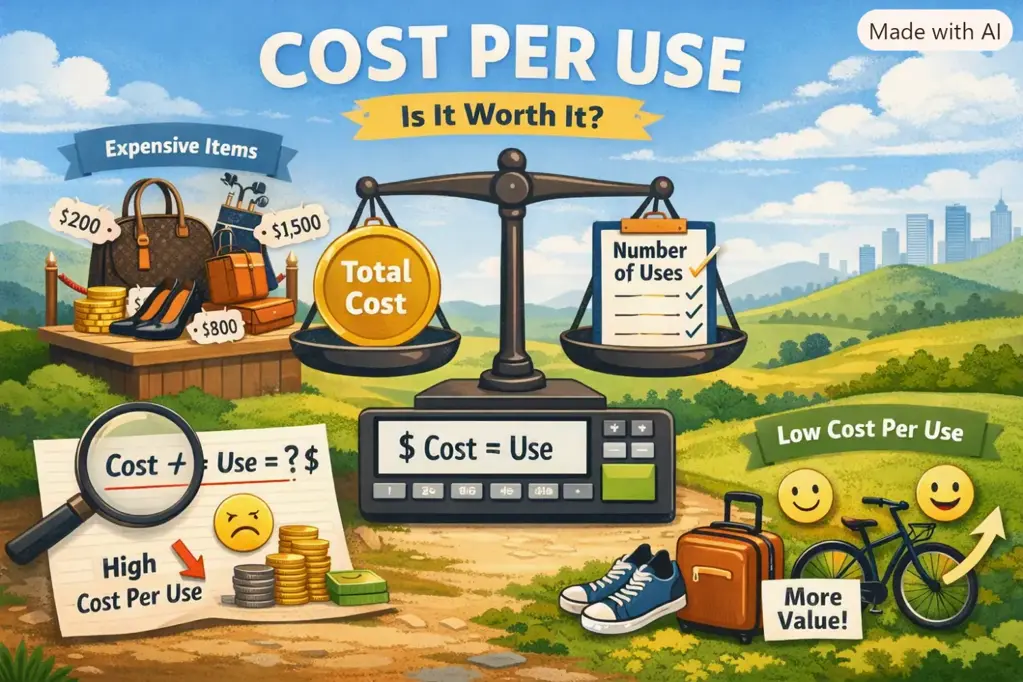
Cost per use is the total amount you pay to own an item divided by the number of times you expect to use it. For clothing, this is often called cost per wear. For a coffee machine, bicycle, laptop, sofa or fitness equipment, the same principle applies.
The basic cost per use formula is:
Cost per use = total cost of ownership ÷ expected number of uses
This approach is most useful for discretionary purchases with a meaningful upfront cost, especially when you are choosing between a cheaper item and a durable premium alternative. It can help with:
- Clothes, shoes, bags and outerwear
- Home office equipment and electronics
- Kitchen appliances and hobby supplies
- Furniture and mattresses
- Bikes, sports gear and home fitness equipment
It is less useful for essentials you genuinely need immediately, such as replacing broken safety equipment, or for purchases where use is impossible to estimate. Even then, thinking about lifetime cost of ownership can prevent a rushed decision.
How to Calculate Cost Per Use Step by Step
A cost per use calculator does not need to be complicated. You can use your notes app, a spreadsheet or a budgeting category in WhizBudget to record the numbers before you buy.
- Start with the purchase price. Include delivery, taxes, import charges and any setup fees.
- Add ownership costs. Estimate necessary accessories, maintenance, insurance, repairs, consumables and storage.
- Subtract realistic resale value. Only include an amount you would be genuinely likely to receive after selling fees and collection or postage costs.
- Estimate the number of uses conservatively. Base this on your current routine, not your best intentions.
- Divide the net ownership cost by expected uses. Compare the result with alternatives and your own spending priorities.
Here is a worked example. You are considering a €280 waterproof walking jacket.
| Cost element | Amount |
|---|---|
| Jacket price | €280 |
| Waterproofing treatment over five years | €30 |
| Expected resale value after five years | -€40 |
| Net cost of ownership | €270 |
| Expected wears: 45 per year for five years | 225 |
| Cost per use | €1.20 |
If you mainly walk in dry weather and realistically expect 10 wears a year, the result changes to €5.40 per use. Neither figure automatically makes the jacket good or bad value. The important question is whether that likely use and cost fit your lifestyle and budget.
Estimate the Real Cost of Ownership
The purchase price can understate what an item will cost you. Before deciding, look at its lifetime cost of ownership. This is especially important for products with recurring costs or space requirements.
- Maintenance: servicing a bicycle, cleaning a wool coat, replacing filters or sharpening tools.
- Accessories: cases, chargers, cables, specialist shoes, software subscriptions or compatible equipment.
- Repairs: consider likely wear and whether repairs are affordable and available locally.
- Consumables: coffee pods, printer ink, cleaning products, batteries or replacement parts.
- Storage: bulky equipment can use valuable space in a small flat, garage or paid storage unit.
- Opportunity cost: money spent now cannot earn interest, reduce expensive debt or fund another goal.
- Resale value: durable, repairable brands may retain some value, but fashion trends and technology often depreciate quickly.
Opportunity cost does not mean you should never buy something enjoyable. It means you should acknowledge the trade-off. If a €600 purchase means delaying an emergency fund contribution or carrying credit card debt, its real cost is higher than €600.
Set a Personal Cost-Per-Use Limit Before You Buy
There is no universal “good” cost per use. A €2 cost per wear may be excellent for a tailored work coat and unnecessary for a novelty outfit. Your limit should reflect your income, goals, current savings and the category.
Set the limit before browsing sales, reviews or social media. This reduces the temptation to reverse-engineer a justification for something you already want. You might decide that everyday clothes should cost no more than €1 to €2 per wear, while equipment that supports a weekly hobby can cost more because it replaces paid activities or provides substantial enjoyment.
Also use a simple affordability check: can you pay in full from money allocated to discretionary spending, without touching rent, bills, debt repayments, emergency savings or near-term goals? A low estimated cost per use does not make a purchase affordable today.
Compare a Premium Purchase With a Cheaper Alternative
Premium is not always better value. Compare items on the same realistic assumptions rather than assuming the expensive option will last forever.
| Option | Net ownership cost | Expected uses | Cost per use |
|---|---|---|---|
| Basic office chair | €160 | 500 workdays | €0.32 |
| Ergonomic chair | €620 purchase + €30 maintenance - €200 resale = €450 | 1,500 workdays | €0.30 |
On these assumptions, the ergonomic chair is slightly cheaper per use and may offer better comfort. However, it only wins if you work from home often enough, have the space, and can afford it without borrowing. If your job may change in six months, the cheaper chair or a quality second-hand option may be the more sensible choice.
Look beyond the calculation as well. Check warranty terms, repairability, return policy, safety, comfort and whether the item genuinely solves a problem you have now.
Examples of Cost Per Use in Everyday Spending
Clothing
A €150 pair of leather boots worn twice a week for three winters can have a low cost per wear, particularly if they can be resoled. But occasionwear purchased for one event often has a high cost per use. Borrowing, renting, buying second-hand or choosing something already in your wardrobe may be better value.
Fitness equipment
A €500 exercise bike used four times a week for two years works out at about €1.20 per session before maintenance. If previous home workouts usually stopped after a month, use that history. Try a gym pass, class pack or second-hand machine first rather than assuming a new purchase will transform your routine.
Electronics
A higher-spec laptop can be worthwhile if it supports paid work, study or frequent creative projects for several years. For a phone upgrade, separate a genuine need—such as a failing battery or unsupported security updates—from the appeal of a new model. Technology resale values can fall quickly, so be cautious when counting on them.
Furniture
Furniture used daily, such as a mattress, dining chairs or sofa, may justify a larger budget if it is durable and comfortable. Measure the room first, check delivery costs, and factor in moving or disposal. A bargain sofa that does not fit your home or needs replacing quickly is not a bargain.
When Cost Per Use Can Mislead You
Cost per use is useful, but it has limits. The biggest risk is treating a hopeful estimate as a fact. If you have not used similar items in the past, assume lower usage—not the version of you who suddenly has unlimited time, energy and enthusiasm.
It can also encourage overbuying. An item used frequently is not automatically worth upgrading if your existing version works well. And a low cost per use should never excuse buying on credit at high interest, ignoring a lack of storage, or purchasing something that creates stress.
Finally, not every benefit is financial. A piece of art, a special meal or a gift may have a high cost per use but still be meaningful. Value-based spending allows room for joy; it simply asks you to make the choice consciously and within your means.
A Pre-Purchase Worksheet for High-Cost Items
Use this short worksheet before buying any non-essential item that would noticeably affect your monthly budget:
- What problem will this solve, and do I have a cheaper or free solution?
- What is the all-in purchase price, including delivery and accessories?
- What maintenance, repairs, subscriptions, storage or disposal costs are likely?
- How many times did I use a similar item in the past year?
- What is my conservative expected number of uses over its life?
- What could I realistically resell it for?
- What is the resulting cost per use?
- Can I pay in full from my discretionary budget after bills, savings and debt commitments?
- What goal, purchase or financial progress am I giving up by buying this now?
- Will I still want it after a 48-hour pause, or a 30-day pause for larger purchases?
Tracking planned purchases alongside your spending in the free WhizBudget budget app can make the trade-offs visible before the money leaves your account.
FAQs About Cost Per Use
Is a lower cost per use always better?
No. It is one comparison tool, not the only decision rule. An item can have a low cost per use and still be unaffordable, unnecessary or unsuitable for your home and needs.
How do I estimate the number of uses accurately?
Start with your past behaviour. Check how often you exercised, travelled, wore similar clothes or used comparable equipment in the previous year. Then round down to allow for changing routines, holidays, illness and loss of interest.
Should I include resale value in a cost per use calculation?
Yes, but be conservative. Use likely local resale prices after selling fees, not the original retail price or optimistic listings that have not sold.
Does cost per use work for subscriptions?
Yes. Divide the total subscription cost over a period by the number of times you used it. This can reveal underused streaming services, apps, memberships and delivery benefits.
How does opportunity cost affect an expensive purchase?
Opportunity cost is what the money could otherwise do, such as earn interest in savings, reduce high-interest debt or pay for a priority goal. It matters most when your budget is tight or you would need to borrow.
What is a good cost per use for clothing?
It depends on your income, wardrobe and how often you will wear the item. Set a personal target based on your discretionary budget, and compare it with lower-cost alternatives rather than relying on a universal number.
Make Bigger Purchases Earn Their Place in Your Budget
Cost per use shifts the question from “Is this expensive?” to “Will this deliver enough value for the money, space and attention it requires?” Calculate the full cost, be conservative about use, compare alternatives and protect your core financial priorities.
The best purchase is not necessarily the cheapest or the most premium. It is the one that fits your real life and your financial plan. Use WhizBudget, the free budget app, to plan for larger purchases, track discretionary spending and make every euro work harder for the things you truly value.
Related Articles



Joke of the day by GiggleTime