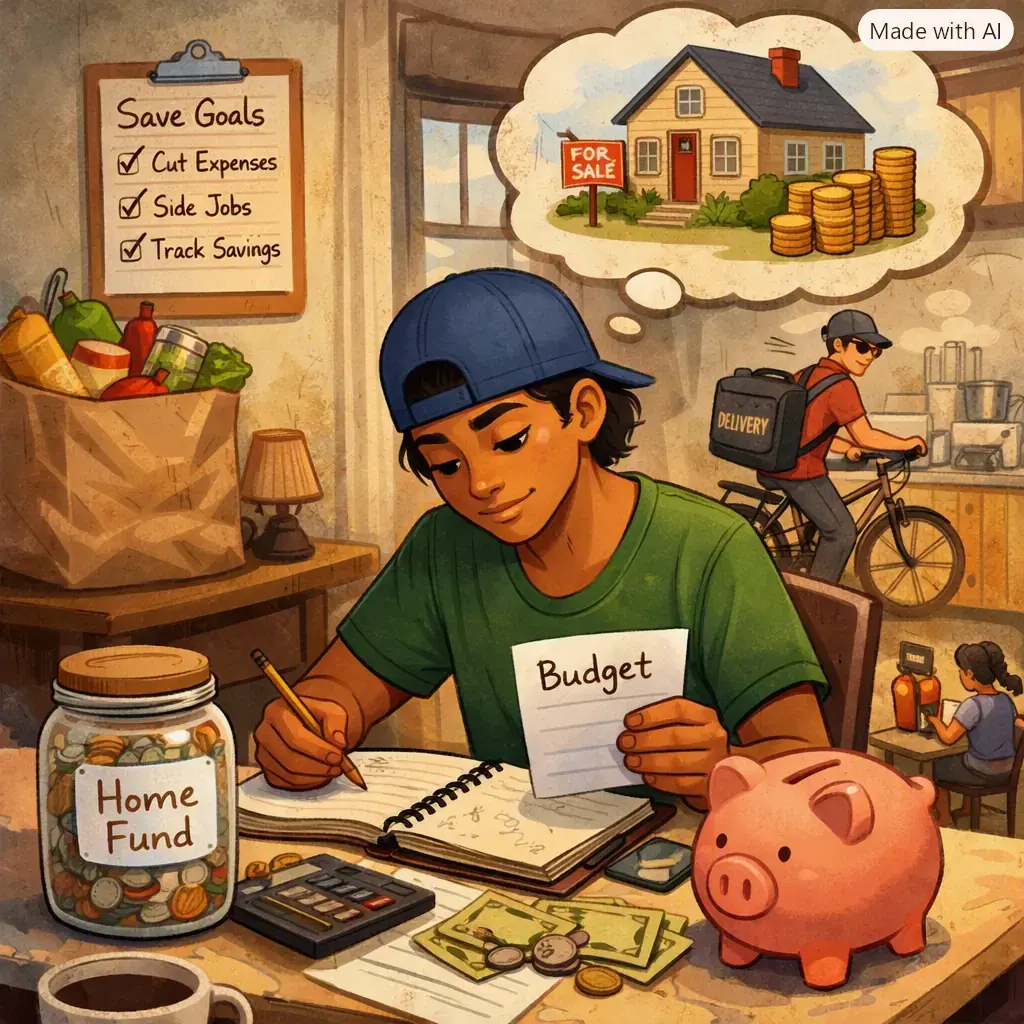
How to Save for a Down Payment on a Low Income: A Realistic Step-by-Step Plan
Buying a home on a limited income can feel out of reach, especially when prices, rents and everyday bills leave little spare cash. But a low income does not automatically rule out homeownership. The key is to build a target that reflects your real costs, create a repeatable monthly system and use every legitimate source of support available.
This guide explains how to save for a down payment on a low income without relying on extreme cutbacks or draining your emergency fund. The goal is steady progress: a practical down payment savings plan that works with your current circumstances and can improve as your income grows.
Set a Realistic Homebuying Savings Target
Before deciding how much to save each month, work out the full amount you will need. Focusing only on the deposit can leave you short when it is time to make an offer, complete the purchase or move in.
Your target should include four parts:
- Down payment or deposit: The amount required by your lender. Requirements vary by country, lender, property type and your credit profile.
- Purchase and closing costs: These can include valuation or survey fees, legal or notary fees, lender fees, taxes, registration charges and insurance.
- Moving and setup costs: Include removals, utility deposits, basic furniture, repairs and appliances.
- Post-purchase cash cushion: Keep money aside for unexpected repairs or a temporary income disruption after you move.
For example, if you hope to buy a €180,000 home and need a 10% deposit, the deposit is €18,000. Add €5,000 for taxes and transaction costs, €2,000 for moving and €3,000 as a cash cushion. Your real savings target is €28,000, not €18,000.
How much to save for a down payment depends on local lending rules. In some markets, buyers may qualify with a smaller deposit, while a larger deposit can reduce monthly repayments and improve lender options. Ask a regulated mortgage adviser or lender for a realistic affordability estimate before setting a fixed property price.
Calculate How Much You Can Save Each Month
A useful first-time homebuyer savings strategy starts with your actual cash flow, not an idealised budget. Review the last two or three months of bank statements and identify your average take-home income and essential spending.
| Sample monthly budget | Amount |
|---|---|
| Take-home pay | €2,000 |
| Rent, utilities and insurance | €900 |
| Food and household essentials | €320 |
| Transport | €180 |
| Minimum debt payments | €120 |
| Phone, healthcare and other essentials | €180 |
| Flexible spending | €160 |
| Available for goals | €140 |
In this example, €140 a month equals €1,680 a year before interest, gifts or extra income. That may not look dramatic, but it creates a foundation. If the saver later adds €60 through lower costs and €100 from occasional extra work, they reach €300 a month, or €3,600 a year.
Start with an amount you can sustain even in an expensive month. Automate it for the day after payday. Saving €75 reliably is better than planning to save €300 and repeatedly transferring it back.
Choose the Right Down Payment Account
Money needed within the next few years should usually be protected from large investment swings. A dedicated savings account keeps your house fund separate from everyday spending and makes progress easier to see.
- Easy-access savings account: Suitable when your buying timeline is uncertain or you need flexibility.
- Notice or fixed-term savings account: May offer a better rate, but check access rules and penalties before locking money away.
- Government-supported homebuyer account: Some European countries offer tax advantages, bonuses or matched savings schemes for qualifying buyers. Check contribution limits, property rules and withdrawal conditions.
- Cash account versus investments: If you expect to buy within roughly five years, cash is often the safer choice. Investments can fall in value just when you need the money.
Keep your emergency fund separate from the down payment account. Name the account clearly, such as “Home Deposit + Costs,” and set up an automatic transfer. WhizBudget, a free budget app, can help you label this goal and see whether your monthly savings are on track.
Find Room in Your Budget Without Cutting Essentials
When you save for a house on a low income, the biggest gains usually come from your largest recurring costs, not from giving up every small pleasure. Never cut food, healthcare, necessary insurance or debt payments simply to make a larger transfer into savings.
Review these areas first:
- Housing: If safe and practical, consider a house share, moving at the end of a lease, taking in a lodger where permitted, or negotiating bills with housemates. Even a temporary reduction in rent can accelerate your target.
- Transport: Compare public transport passes, cycling, car-sharing and insurance quotes. If you own a costly car, calculate its full monthly cost, including fuel, maintenance, parking and depreciation.
- Utilities and subscriptions: Switch tariffs where available, cancel duplicate streaming services and review mobile plans. Direct the exact savings to the house fund.
- Food: Plan a weekly menu, use a shopping list, buy store brands and reduce convenience purchases. Aim for realistic savings, not a restrictive diet.
- Debt: High-interest credit card or consumer debt can make mortgage approval harder. Paying it down may be a better use of extra money than adding every euro to the deposit.
Use a “one change at a time” approach. Choose two expenses to improve this month, then check whether the saving actually appeared in your account. This is more effective than creating a harsh budget you cannot maintain.
Increase Your Savings Rate With Income Boosts
Cost-cutting has a limit, particularly on a low income. Increasing income, even temporarily, can make a major difference to a down payment savings plan.
Consider options that fit your skills, schedule and local rules:
- Ask about overtime, additional shifts or a pay review at your current job.
- Take freelance work in administration, tutoring, translation, design, childcare or pet care.
- Sell unused electronics, clothing, furniture or hobby equipment.
- Offer seasonal services, such as holiday cover, gardening or event work.
- Train for a qualification that improves your pay or job prospects, while checking the cost and likely return.
Assign income boosts before you receive them. A simple rule is to send 50% to 80% of side income to your home fund and use the rest for tax, work expenses or normal life. If freelance income is taxable in your country, keep a separate amount for tax rather than accidentally spending money you will owe later.
Use Windfalls and Tax Refunds Strategically
Windfalls can shorten the timeline without increasing your regular monthly pressure. This includes tax refunds, bonuses, gifts, rebates, back pay and proceeds from selling belongings.
Before transferring a windfall, use this order:
- Catch up on essential bills or overdue payments.
- Build or restore a basic emergency fund.
- Pay down high-interest debt.
- Put the remainder into your deposit fund.
You do not need to send 100% of every windfall to savings. Keeping a small planned portion for enjoyment can make the process sustainable. The important part is deciding in advance, rather than letting the money disappear through unplanned spending.
Research Down Payment Assistance Programs
Down payment assistance programs may make buying possible sooner, but they are not all the same. Depending on where you live, support may come from a national government, local authority, housing association, employer or charity. It can take the form of a grant, shared-equity arrangement, matched savings, low-deposit mortgage guarantee, subsidised loan or tax benefit.
Read the conditions carefully. Assistance may have income limits, first-time buyer requirements, maximum purchase prices, residency rules or restrictions on renting out the property. Some support is a true grant that does not need repayment; others are loans or equity arrangements that are repaid on sale, refinancing or after a set period.
Do not assume an advertised scheme is free money. Confirm the repayment terms, fees, effect on future equity and whether the provider is legitimate. A mortgage adviser, local housing office or official government housing website can help you identify current programmes in your area.
Avoid Common Mistakes That Delay Homebuying
- Emptying your emergency savings: A home purchase without a cash buffer can leave you relying on expensive credit after one repair or missed pay cheque.
- Taking on new high-interest debt: Buy-now-pay-later balances, credit cards and personal loans can affect affordability checks.
- Saving only for the deposit: Budget for transaction costs, moving and immediate repairs.
- Ignoring your credit record: Check your report early, correct errors and pay bills on time. Requirements differ by country, but payment history matters to many lenders.
- Chasing a target that no longer fits: Revisit property prices and lending conditions regularly so your goal remains realistic.
Track Progress With Quarterly Milestones
A long-term target is easier to manage when divided into short checkpoints. If your total goal is €24,000 and you can save €250 a month, your base timeline is eight years. That is useful information, not failure: it tells you that lower housing costs, income growth, a lower-priced area or assistance programmes may need to be part of the plan.
Set quarterly milestones and review three numbers: your total house fund, your average monthly saving and your debt balance. For example:
| Quarter | Monthly saving goal | Target balance added |
|---|---|---|
| Months 1–3 | €150 | €450 |
| Months 4–6 | €200 | €600 |
| Months 7–9 | €250 | €750 |
| Months 10–12 | €250 plus windfalls | €750+ |
Use WhizBudget to compare your plan with what you actually spent, then adjust the next quarter instead of giving up after an imperfect month. A home fund grows through consistency, not perfection.
Frequently Asked Questions
Can I save for a down payment on a low income?
Yes. Start with a sustainable automatic amount, reduce one or two major expenses where possible, seek income increases and investigate local buyer support. The timeline may be longer, but steady savings and improved affordability can move you closer.
How much should I save for a down payment?
Save for the lender’s required deposit plus purchase costs, moving costs and an emergency cushion. Deposit requirements vary widely by location and lender, so get an estimate based on your target area and financial profile.
Should I use my emergency fund for a house deposit?
Usually no. Keep emergency savings separate so an unexpected expense does not force you into high-interest debt or put mortgage payments at risk after you buy.
Are down payment assistance programs grants?
Some are grants, but others are loans, guarantees, shared-equity schemes or tax benefits. Always check eligibility, repayment requirements, fees and restrictions before applying.
Is it better to pay off debt or save for a home first?
High-interest debt usually deserves priority because it is expensive and may reduce your mortgage affordability. You can still keep a small automatic home savings transfer going to maintain the habit while you reduce debt.
Where should I keep my down payment savings?
For a purchase planned within a few years, a separate cash savings account is generally more suitable than volatile investments. Compare interest rates, access terms, deposit protection and any government homebuyer incentives available where you live.
Conclusion: Build Your Home Fund One Month at a Time
Saving for a home on a limited income is not about finding a perfect budget. It is about setting a complete target, protecting your financial safety net and making regular progress with the money you genuinely have available. Start with one automated transfer, review your biggest costs and use extra income and eligible support to accelerate your plan.
Create your down payment savings plan today with WhizBudget, the free budget app that helps you track spending, organise savings goals and stay focused on your next milestone.
More From the Blog



Joke of the day by GiggleTime